Read the latest news stories from the Trust
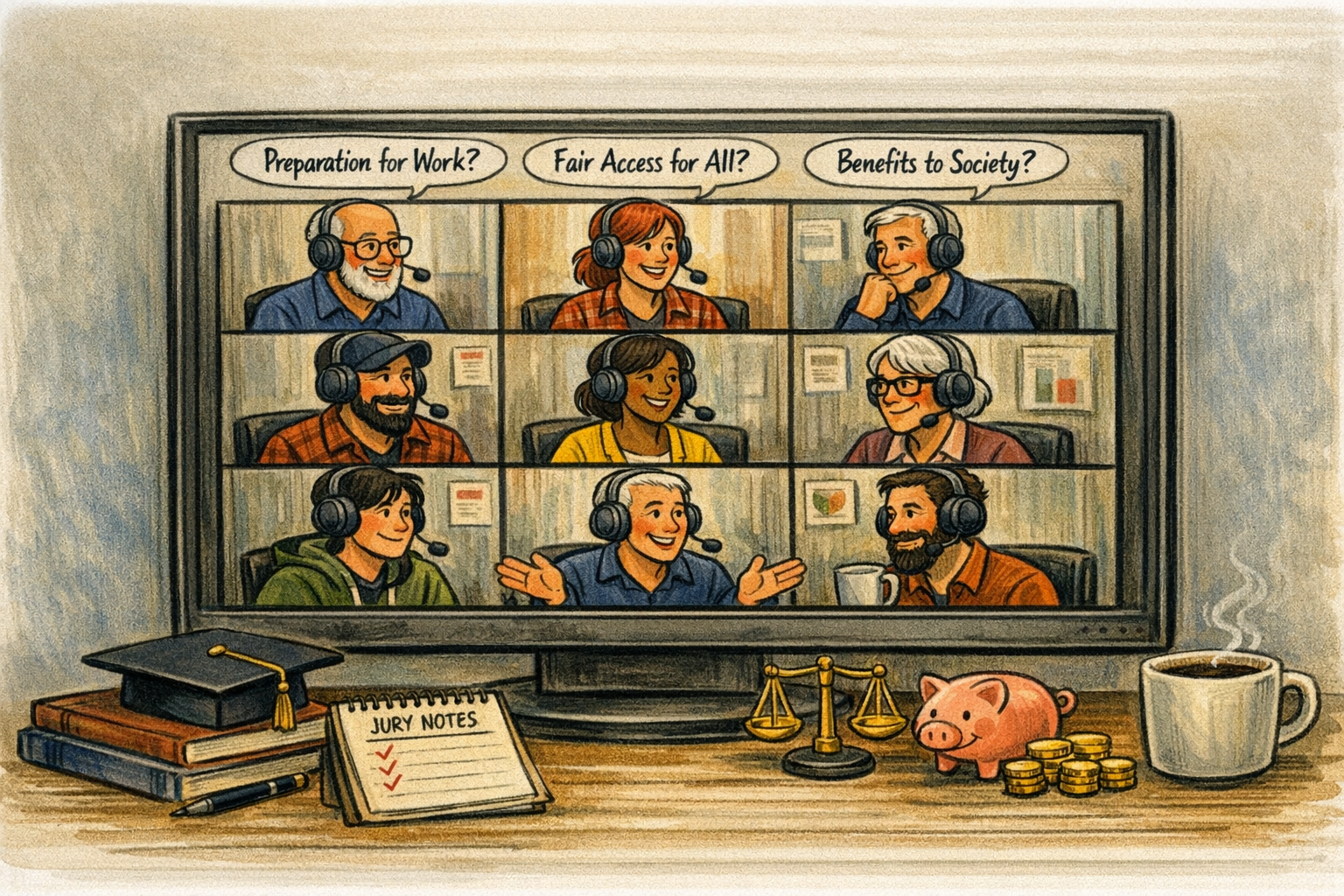
The first findings paper from the Carnegie Education Fund (CEF) and Ipsos’ Citizens’ Jury on higher education funding has been published today setting out how members of the public understand the purpose and value of higher education after several weeks of structured deliberation.
Nineteen people from across Scotland were randomly selected to take part in the Jury working with expert witnesses and balanced, accessible evidence, they explored what higher education is for and their priorities and expectations for public funding.
They were asked to develop a set of principles to guide future debate and decision making on the issues presented. These principles, which shouldn’t be read as technical policy recommendations, provide important insight into what the citizens valued, questioned and prioritised.
This first paper shows that when presented with evidence about financial pressures and labour market realities, jurors placed growing emphasis on higher education’s role in preparing people for work. Many saw this as central to ensuring opportunity is delivered fairly and widely.
Despite this, the wider personal and social value of higher education was also recognised, creating a tension between what jurors thought higher education ought to provide and what current conditions may make possible.
This paper does not tell the full story of the citizens’ jury. Upcoming thematic papers in this series will explore participants views on equity and access, pathways and universities. These will be released in coming weeks.
To find out more about the Citizens’ Jury and why it was commissioned, see the methodology paper published on 17 March.
Image: AI generated